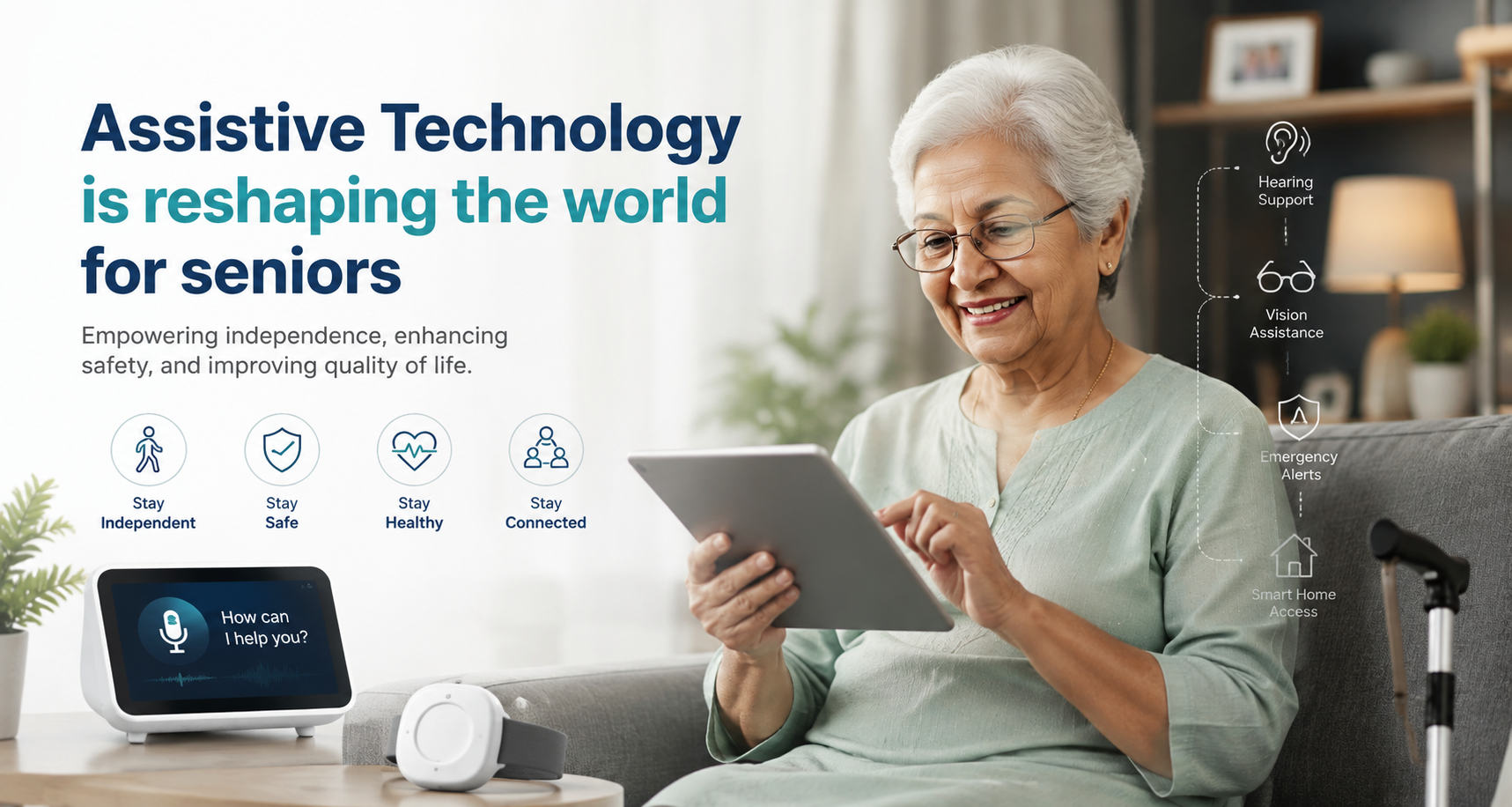
The world is rapidly getting older. The global demographic shift towards an older population is unprecedented, with implications for healthcare systems, families and communities. Aging is a normal process, but it can be accompanied by physical, cognitive, sensory and social changes that impact a person's life. Within this changing environment, assistive technology has become a game-changer, helping older people to remain independent, maintain their dignity and enjoy their life.
Assistive technology includes any device, equipment, software or system that is used by an older adult to help them carry out an activity that they may have struggled with before. Assistive technologies are redefining how individual ages and maintaining independence.
The ability to promote independent living is one of the most important contributions of assistive technology. Typically, older adults with mobility issues relied on family members or caregivers. In today's world, smart wheelchairs, walkers with obstacle detection, stair lifts, and exoskeleton devices can help seniors to move around more safely and confidently. These technologies decrease the risk of falls, which is one of the most common injuries and hospitalizations among older adults.
There's been an incredible transformation in the field of healthcare management as well. Smart watches and fitness trackers can track key health metrics like heart rate, blood pressure, oxygen saturation, and sleep patterns in real-time. These devices can give real-time health data, which can help detect potential health problems early, allowing for prompt medical intervention. Another benefit of remote monitoring systems is that they enable healthcare providers to monitor their patients remotely, thereby minimizing the need for frequent visits to the hospital and increasing the availability of care for patients who reside in remote locations.
Another area where assistive technology is playing a great role is cognitive health. Dementia and Alzheimer's disease can be a major problem for seniors and their families. Digital reminder systems, medication management applications, GPS tracking devices, and voice-activated assistants enable individuals to keep up with daily routines and retain some autonomy. These state-of-the-art technologies can even identify and notifying caregivers of unusual behavior and when intervention might be needed.
Communication technologies are now a vital part of addressing older peoples' social isolation. Loneliness is acknowledged as a significant public health problem, associated with depression and anxiety, cardiovascular diseases and shorter life span. The smart-phone, tablet, video-calling services and social networking apps help seniors to stay connected with family, friends and other support services no matter where they are. These technologies are made more accessible, including for those with low technical proficiency, through voice control.
Smart home technology has become a revolution in elderly care, too. Smart lighting systems, automated door locks, motion sensors, fall detection devices and voice-controlled appliances create safe living environments. These technologies not only help to make things easier but also give families and carers peace of mind. For instance, in critical situations, prolonged inactivity can be detected by the motion sensors and an automatic warning call made to emergency contacts, which could save lives.
Artificial Intelligence (AI) and robotics are the future of geriatric care. Virtual assistants can be programmed with AI to remind users to take their medication, go to appointments, or exercise. In future Companion robots will be provide social interaction, cognitive stimulation and emotional support. Such technologies are not a substitute for human connections, but they can be used as an aid to care and promote better health.
Assistive technology has a broader impact than the user. This can impose physical, emotional and financial stresses on caregivers who are supporting older members of the family. ATs can help to reduce the stress for caregivers and increase the sustainability of home-based care by increasing the self-care abilities of individuals and decreasing the dependency of the caregiver. The health systems also gain by a decrease in hospital admissions, shorter hospital stays and lower healthcare costs.
There are still challenges, however, with these benefits. Adoption could be impeded by high costs, limited access, low digital literacy, and privacy and data security concerns. Many low and middle income countries continue to face affordability issues. There is a need to involve governments, health professionals, technology producers and community groups to overcome these challenges. To achieve equity in benefits, policies are needed that enable access to education and information through digital means that is affordable, easy to use, and well-designed.
In the future, geriatric care will be more technologically advanced. Predictive analytics, personalized health interventions, telehealth, and cutting-edge rehabilitation devices are among the innovations that will help make the lives of seniors better. But technology should be used in addition to, and not in lieu of, compassion, social support and person-centred care.
To wrap up, the use of AT is transforming geriatric care by enabling older adults to enjoy safer, healthier, and more independent lives. It is changing the way that the elderly are perceived: from dependency to opportunity, autonomy and dignity. The further ageing of societies will depend on a successful transition towards supporting and extending access to assistive technologies as a crucial component of inclusive communities where older people can flourish. True progress is not “life length,” it is “life fullness”—life lived fullfilled, connected and of good quality each minute of every year added.
Author Name
Srinivas Bishoyi
