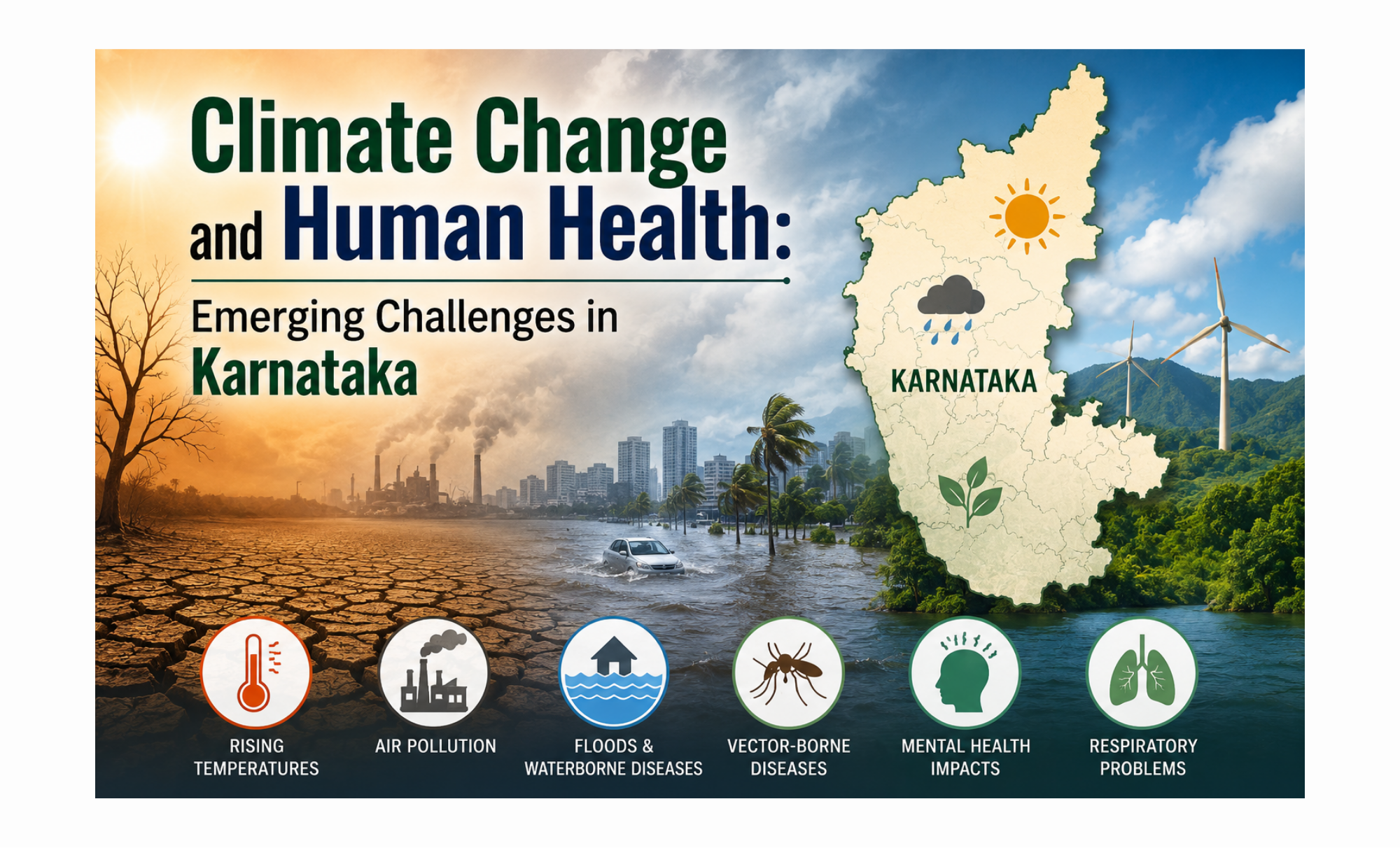
Climate change is no longer a distant environmental issue - it is a reality that affects our daily lives and our health. Around the world, rising temperatures, unpredictable rainfall, floods, droughts, and worsening air pollution are becoming more common. Karnataka, with its diverse geography ranging from the Western Ghats to the coastal belt and dry inland districts, is also experiencing these changes. While climate change is often discussed in terms of its impact on the environment, its effects on human health are equally important and deserve greater public attention.
Over the past few years, Karnataka has witnessed increasing temperatures, irregular monsoon patterns, water shortages in urban areas, and frequent flooding in some regions. These environmental changes directly and indirectly influence the health of people across the state. Heatwaves have become more intense, especially in northern districts, increasing the risk of heat exhaustion, dehydration, and heat stroke. Older adults, children, pregnant women, outdoor workers, and people with chronic illnesses are particularly vulnerable to extreme heat.
Climate change also creates favourable conditions for the spread of mosquito-borne diseases. Rising temperatures and changes in rainfall provide ideal breeding environments for mosquitoes that transmit diseases such as dengue, malaria, and chikungunya. During and after the monsoon season, stagnant water often becomes a breeding ground for mosquitoes, leading to an increase in disease outbreaks. Preventing mosquito breeding by eliminating standing water around homes and communities is one of the simplest yet most effective ways to reduce the risk of infection.
Heavy rainfall and floods can contaminate drinking water sources, increasing the spread of water-borne diseases such as diarrhoea, typhoid, leptospirosis, and cholera. Flood-affected communities often face disruptions in sanitation, access to safe drinking water, and healthcare services. Practising good hygiene, drinking safe water, and maintaining proper sanitation become especially important during such situations.
Air quality is another growing concern. Rising temperatures, vehicle emissions, industrial pollution, and dust contribute to poor air quality, particularly in rapidly growing cities such as Bengaluru. Poor air quality can worsen asthma, chronic obstructive pulmonary disease (COPD), allergies, and other respiratory illnesses. Children, older adults, and individuals with pre-existing lung or heart conditions are especially at risk. Reducing vehicle emissions, promoting public transport, planting more trees, and improving urban planning can help improve air quality and protect public health.
Climate change also affects food security and nutrition. Changes in rainfall patterns, prolonged droughts, and extreme weather events can reduce agricultural productivity, affecting crop yields and food availability. Karnataka’s farmers, who depend heavily on seasonal rainfall, are particularly vulnerable. Lower agricultural production can lead to higher food prices, reduced dietary diversity, and an increased risk of malnutrition, especially among children and economically disadvantaged families.
The mental health impacts of climate change are often overlooked. Farmers facing repeated crop failures, families displaced by floods, and individuals affected by natural disasters may experience stress, anxiety, depression, and emotional distress. Building community support systems, providing access to mental health services, and strengthening disaster preparedness can help reduce these psychological impacts.
Certain groups are more vulnerable to climate-related health risks than others. Children have developing immune systems and are more susceptible to infections and heat-related illnesses. Older adults often have reduced ability to cope with extreme temperatures. Pregnant women may face increased health risks during heatwaves. People living in low-income communities, coastal regions, tribal areas, and drought-prone districts may have limited access to healthcare and resources needed to adapt to changing environmental conditions.
Fortunately, many climate-related health risks can be reduced through simple preventive measures. Staying hydrated during hot weather, avoiding outdoor activities during the hottest hours of the day, wearing light-coloured clothing, and seeking shade can reduce the risk of heat-related illness. Families should ensure that drinking water is clean and safe, especially after heavy rains or floods.
Communities should regularly remove stagnant water to prevent mosquito breeding and use mosquito nets or repellents where necessary. Planting trees, conserving water, reducing waste, and using public transport or cycling whenever possible are small but meaningful actions that contribute to a healthier environment.
Government agencies, healthcare professionals, educational institutions, and local communities all have important roles to play.
Early warning systems for heatwaves and floods, stronger disease surveillance, climate-resilient healthcare facilities, and public awareness campaigns can help communities prepare for and respond to climate-related health threats. Schools can educate children about environmental conservation, while healthcare providers can counsel patients on protecting themselves during extreme weather events.
Every individual can contribute to addressing climate change. Conserving electricity, reducing the use of single-use plastics, supporting renewable energy, planting trees, and adopting sustainable lifestyles not only benefit the environment but also improve public health. Community participation is essential for building resilience against climate-related challenges.
Climate change is not only an environmental concern - it is a public health challenge that affects everyone. The choices we make today will influence the health and well-being of future generations. By increasing awareness, adopting healthier lifestyles, protecting natural resources, and working together as communities, Karnataka can become more resilient to the health impacts of climate change. A healthier environment ultimately leads to healthier people, making climate action an investment in the future of every family.